
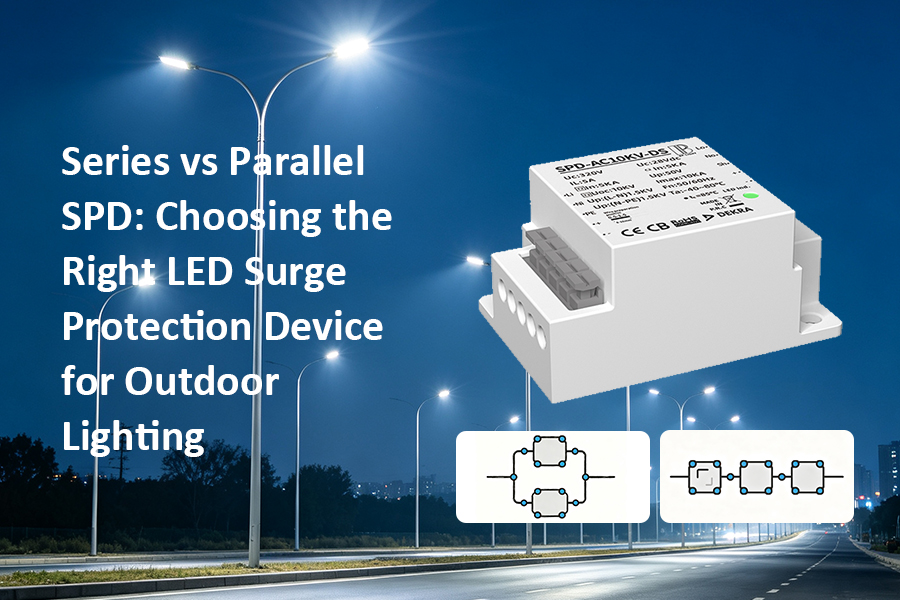
Why Surge Protection Matters in Outdoor LED Lighting
Outdoor LED lighting systems combine sensitive electronic LED drivers with long power cables, exposed installation environments, and—in many smart lighting projects—communication interfaces such as DALI, DMX, or RS485. Lightning-related disturbances, switching events, and surge energy entering through connected wiring can place both the power circuit and control electronics at risk.</p 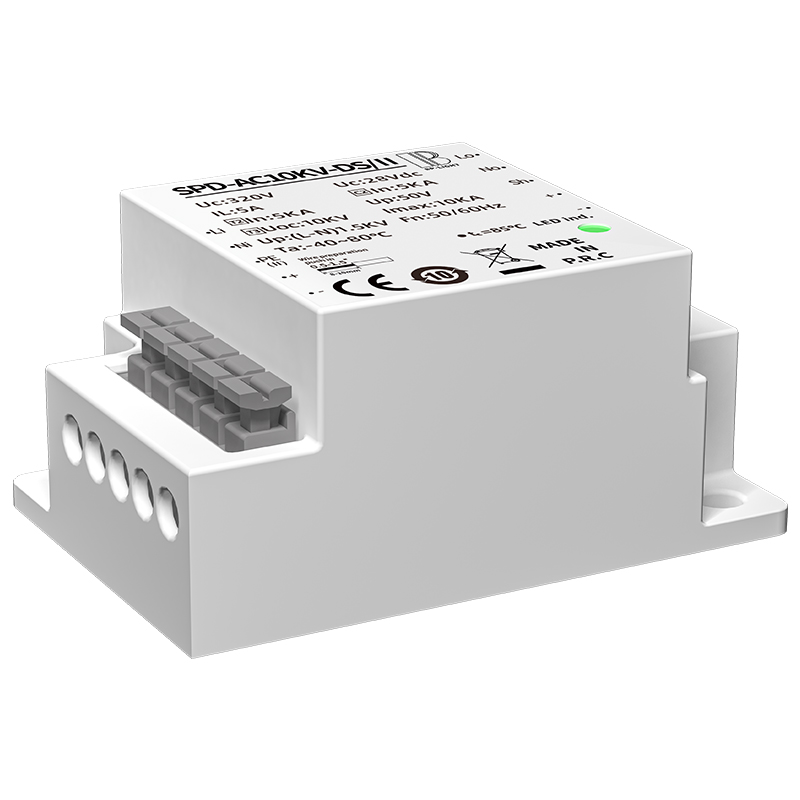
>
This is particularly important in street lighting, tunnel lighting, landscape lighting, architectural lighting, and other installations where replacing a failed luminaire may involve more than the cost of the LED driver itself. Pole access, labor, traffic control, troubleshooting, and system downtime can all increase the real maintenance cost of inadequate surge protection.
For engineers and procurement teams, choosing an LED surge protection device therefore involves more than comparing a single surge rating. The connection architecture, protected circuits, control interfaces, electrical compatibility, and installation requirements all need to match the actual lighting system.
Series vs Parallel SPD: What Is the Difference?
The fundamental difference between a series-connected LED surge protector and a parallel LED surge protector is how the SPD is connected within the electrical circuit.
A series-connected SPD is installed in the current path of the protected equipment. A parallel SPD, by contrast, is connected across the circuit and normally remains outside the main load-current path.
| Comparison | Series-Connected SPD | Parallel SPD |
|---|---|---|
| Connection method | Installed in series with the protected circuit | Connected across the protected circuit |
| Normal load-current path | The protection device forms part of the current path | Normal load current does not normally flow through the SPD branch |
| Selection focus | Electrical compatibility, load requirements and wiring configuration must be checked carefully | SPD ratings, connection layout, conductor length and installation coordination must be considered |
| Integration | Can be suitable where protection is designed as part of the luminaire or lighting circuit architecture | Commonly used as an additional protection path across the supply circuit |
| Maintenance considerations | Depend on the device design and how it is integrated into the circuit | Depend on the SPD design, indication method and installation configuration |
| Best application | Application dependent | Application dependent |
Neither architecture is universally better. The correct choice depends on the LED driver, luminaire design, electrical system, surge environment, maintenance strategy, applicable project requ
irements, and the characteristics of the SPD itself.
Why Smart Lighting Systems Need More Than Power-Line Protection
Many modern outdoor lighting systems no longer consist of only an AC input and an LED driver. Smart street lights, tunnel lighting systems, architectural lighting, and centralized lighting networks may also include low-voltage control or communication circuits.
Common examples include:
- DALI for digital lighting control and building or infrastructure lighting networks;
- DMX for architectural and dynamic lighting control;
- RS485 for industrial and smart lighting communication networks.
These interfaces should be considered separately from the main power circuit when developing a surge protection strategy. Protecting only the power input does not automatically mean that every connected communication interface is protected.
For projects using DALI, DMX, or RS485, engineers should therefore review whether the selected LED lighting SPD provides protection suitable for the required power and control interfaces.
When a Series-Connected SPD May Be Considered
A series-connected SPD can be considered when the luminaire or lighting-system architecture is designed around an in-line protection device. Because the SPD becomes part of the protected circuit, engineers should verify its electrical compatibility with the LED driver and the complete lighting system before specification.
Important considerations include:
- Input and operating requirements of the LED driver;
- Expected load current;
- Power-system configuration;
- Required surge protection performance;
- DALI, DMX, RS485, or other connected control interfaces;
- Installation location and available enclosure space;
- Earthing or grounding requirements specified by the SPD manufacturer;
- Environmental conditions;
- Maintenance and replacement strategy;
- Applicable project standards and certification requirements.
A series-connected design should not be selected simply because it is described as more advanced or more integrated. It should be selected because its documented specifications match the electrical and operational requirements of the project.
When a Parallel SPD May Be Preferred
A parallel SPD may be appropriate where surge protection is added across an existing power circuit without placing the SPD directly in the normal load-current path. This architecture is widely used in electrical distribution and lighting protection systems, but its performance still depends heavily on correct product selection and installation.
Engineers evaluating a parallel SPD should consider factors such as:
- System operating voltage;
- Required surge-current capability;
- Voltage protection level;
- Connection conductor length and routing;
- Coordination with upstream and downstream protection;
- Earthing arrangement;
- Installation environment;
- End-of-life behavior and maintenance requirements.
The practical comparison is therefore not simply series vs parallel SPD. It is whether the complete SPD configuration is appropriate for the electrical system being protected.
Series vs Parallel SPD for Outdoor Lighting: How Should Engineers Decide?
For outdoor LED lighting, the following questions provide a more useful selection framework than choosing one topology by default.
1. What Does the LED Driver Require?
Confirm the driver’s input characteristics, operating conditions, and surge-withstand requirements. Any series-connected device must be electrically compatible with the protected circuit, while a parallel SPD must also be selected according to the supply configuration and required protection level.
2. Are Lighting Control or Data Lines Present?
If the system includes DALI, DMX, RS485, or another communication interface, determine whether those lines require dedicated surge protection. A power-line SPD alone should not be assumed to protect connected communication electronics.
3. Where Will the SPD Be Installed?
The protection requirements for an SPD installed inside a luminaire may differ from those for a device installed in a street-lighting junction box, cabinet, pole base, or upstream distribution panel.
Installation location affects wiring, coordination, environmental exposure, accessibility, and maintenance planning.
4. What Electrical Ratings Are Required?
Engineers should verify the actual electrical specifications from the official product datasheet. Depending on the SPD and project, relevant parameters may include operating voltage, surge-current ratings, voltage protection level, load-current capability, and other manufacturer-specified characteristics.
These values should never be assumed solely from the product category or installation type.
5. What Happens During Maintenance or End of Life?
Failure and end-of-life behavior vary between SPD designs. Engineers should review the manufacturer’s documentation to understand how the device behaves after protection components reach the end of their service life and how replacement or inspection should be handled.
This is particularly important for street lights and other outdoor installations where access can be costly.
BP-LIGHT Series-Connected SPD for LED Lighting
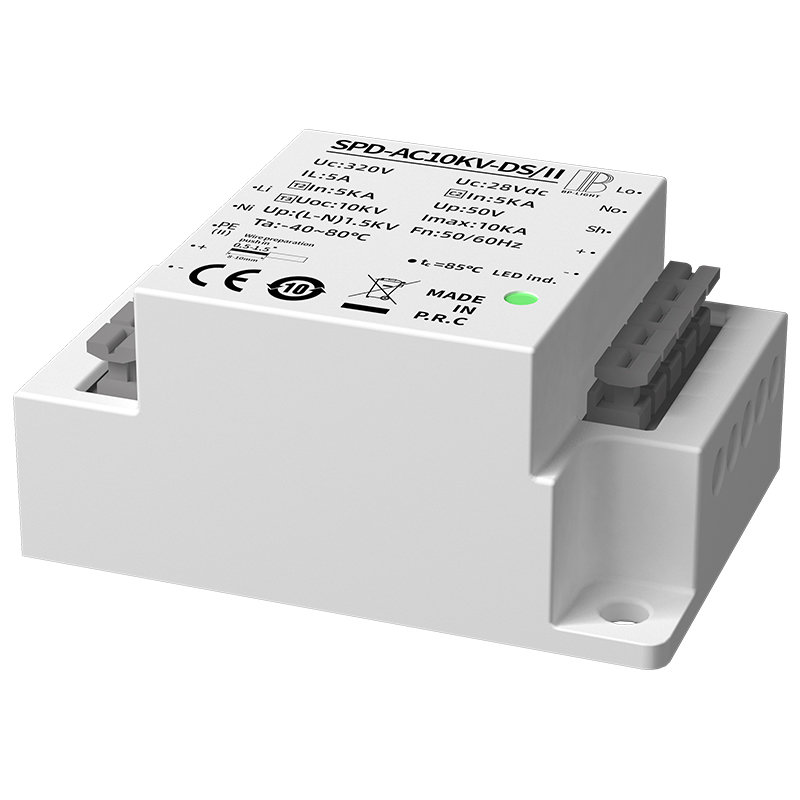
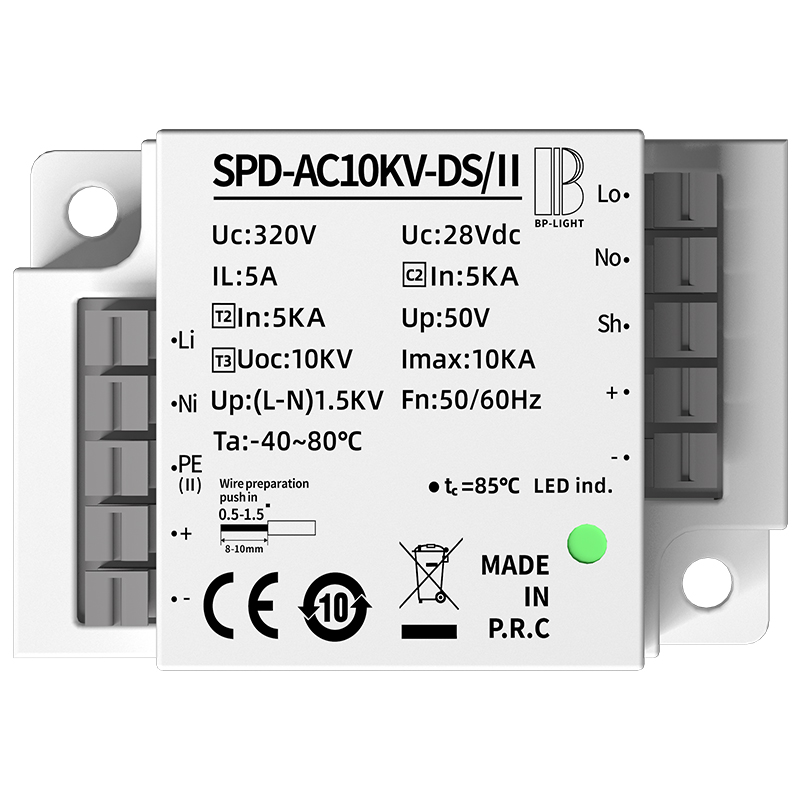
For projects requiring a series-connected protection architecture, BP-LIGHT offers the CE CB RoHS Certified Series-Connected SPD for LED Lighting with DALI / DMX / RS485 Data Line Surge Protection.
Based on the published product information, key characteristics include:
- Product type: Series-connected surge protection device;
- Primary application: LED lighting systems;
- Control/data protection: Designed for applications involving DALI, DMX, and RS485 interfaces;
- Product documentation identifies: CE, CB, and RoHS;
- Application focus: Integration into LED lighting projects requiring surge protection for lighting and associated control interfaces.
This combination is especially relevant for engineers developing smart lighting systems in which both the LED power circuit and connected communication interfaces need to be considered as part of the overall surge protection strategy.
However, engineers should verify the exact model specifications before selection. Electrical ratings such as operating voltage, nominal discharge current (In), maximum discharge current (Imax), voltage protection level (Up), load-current capability, environmental rating, and other technical parameters should be taken from the applicable BP-LIGHT datasheet or technical documentation rather than inferred from the product name.
Why DALI, DMX and RS485 Protection Matters
Smart lighting projects increasingly depend on communication networks to control dimming, monitoring, scheduling, diagnostics, and centralized management. Damage to a communication interface can therefore affect more than an individual luminaire.
For example, a surge disturbance entering a connected control line may affect:
- Lighting controllers;
- Driver communication interfaces;
- Gateways;
- Remote monitoring equipment;
- Network nodes;
- Connected luminaires within the same control system.
For this reason, engineers designing outdoor lighting surge protection should evaluate the complete electrical and communication architecture rather than considering only the mains power input.
Installation Factors Engineers Should Verify
Correct installation is essential to achieving the intended performance of any surge protection device. Installation should always follow the wiring diagram and technical documentation supplied for the exact SPD model.
Before installation, verify:
- Input and output connections: Follow the manufacturer’s designated wiring arrangement for a series-connected device.
- Power and control interfaces: Confirm the correct terminals for the LED power circuit and DALI, DMX, or RS485 lines where applicable.
- Electrical ratings: Confirm that the SPD is suitable for the operating conditions of the LED driver and lighting system.
- Earthing requirements: Follow the product-specific grounding or earthing instructions rather than assuming a generic configuration.
- Protection coordination: Review how the luminaire-level SPD works with upstream surge protection where multiple protection stages are used.
- Environmental protection: Verify whether the installation enclosure provides the required protection against moisture, dust, temperature, and other outdoor conditions.
- Cable routing: Follow good electrical installation practice and the manufacturer’s recommendations to minimize unwanted coupling between protected and unprotected wiring.
If any parameter or wiring requirement is unclear, it should be confirmed with the SPD manufacturer before installation.
Standards and Certification: What Buyers Should Verify
Standards and certification are important in international LED lighting projects, but buyers should avoid assuming that a product meets every SPD standard simply because it carries a certification or compliance mark.
The BP-LIGHT product page identifies CE, CB, and RoHS for this series-connected LED surge protection device. Procurement teams should request the applicable certificates, test reports, declarations, or technical documents for the exact model when these are required by a project specification or destination market.
When evaluating an LED surge protection device, engineers may also need to consider the SPD standards, luminaire requirements, surge-immunity requirements, and local electrical regulations applicable to the complete lighting system.
The safest procurement approach is to match documented product specifications and supporting documentation to the actual requirements of the project rather than relying only on general certification terminology.
Series vs Parallel LED Surge Protection: Selection Checklist
| Selection Factor | Questions to Verify |
|---|---|
| SPD topology | Does the luminaire design require a series-connected, parallel, or another protection configuration? |
| LED driver | Is the SPD electrically compatible with the driver’s operating conditions? |
| Surge environment | What protection performance is required for the installation? |
| Control lines | Does the system include DALI, DMX, RS485, or other communication wiring? |
| Installation location | Will the SPD be installed in the luminaire, junction box, pole, cabinet, or distribution system? |
| Electrical ratings | Are all relevant values confirmed in the official datasheet? |
| Environment | Does the enclosure and installation method suit the outdoor operating conditions? |
| Standards | Do the available documents meet the project’s certification and compliance requirements? |
| Maintenance | How will the SPD be inspected, replaced, or managed at end of life? |
Frequently Asked Questions About Series and Parallel LED SPDs
What is the main difference between a series-connected and parallel LED surge protector?
A series-connected SPD is installed in the current path of the protected circuit, while a parallel SPD is connected across the circuit. Neither design is automatically better; selection depends on the LED driver, electrical architecture, required protection performance, installation method, and project requirements.
Is a series-connected SPD better for outdoor LED lighting?
Not necessarily. A series-connected SPD may be suitable where the lighting system is specifically designed for in-line surge protection, while parallel SPDs are appropriate in many other lighting and distribution architectures. Engineers should compare the documented specifications of the SPD with the actual system requirements.
Why do DALI, DMX and RS485 lines need surge protection?
DALI, DMX, and RS485 interfaces connect sensitive electronic control equipment through communication wiring. Surge disturbances can enter these circuits independently of the main LED power input, so control-line protection should be considered where these interfaces are exposed to surge risk.
Can one SPD protect both LED power and lighting control lines?
Some products are designed to provide protection for both lighting power circuits and specific communication interfaces. BP-LIGHT’s series-connected product is offered for LED lighting applications involving DALI, DMX, and RS485 protection. The exact wiring configuration and technical ratings should be confirmed from the applicable product documentation.
Can this BP-LIGHT SPD be used for street lighting?
The product is intended for LED lighting applications and can be evaluated for projects such as smart street lighting where compatible DALI, DMX, or RS485 interfaces are used. However, engineers should confirm the exact electrical ratings, enclosure requirements, installation configuration, and environmental conditions before specifying the device for a particular outdoor project.
What surge rating should I choose for an LED lighting SPD?
There is no single surge rating that i
s correct for every project. Selection depends on the electrical system, lightning and switching exposure, installation location, upstream protection, LED driver requirements, and applicable standards. Use the official SPD datasheet and project specifications to determine the required ratings.
Conclusion: Choose the SPD Architecture That Matches the Lighting System
The decision between series vs parallel SPD should be based on system compatibility rather than on the assumption that one topology is universally superior.
For outdoor LED lighting, engineers should evaluate the LED driver, electrical architecture, surge environment, control interfaces, installation location, maintenance requirements, and applicable project standards as one complete protection system.
Where a project requires a series-connected LED surge protector together with support for DALI, DMX, or RS485 control-line protection, BP-LIGHT’s Series-Connected SPD for LED Lighting with DALI / DMX / RS485 Data Line Surge Protection is a relevant option to evaluate.
Before specification or installation, confirm the exact model’s electrical ratings, wiring configuration, certification documentation, environmental requirements, and compatibility with the LED driver and lighting control system. For OEM lighting projects, street-lighting systems, or project-specific SPD selection, buyers can contact BP-LIGHT for the applicable technical documentation and engineering support.